
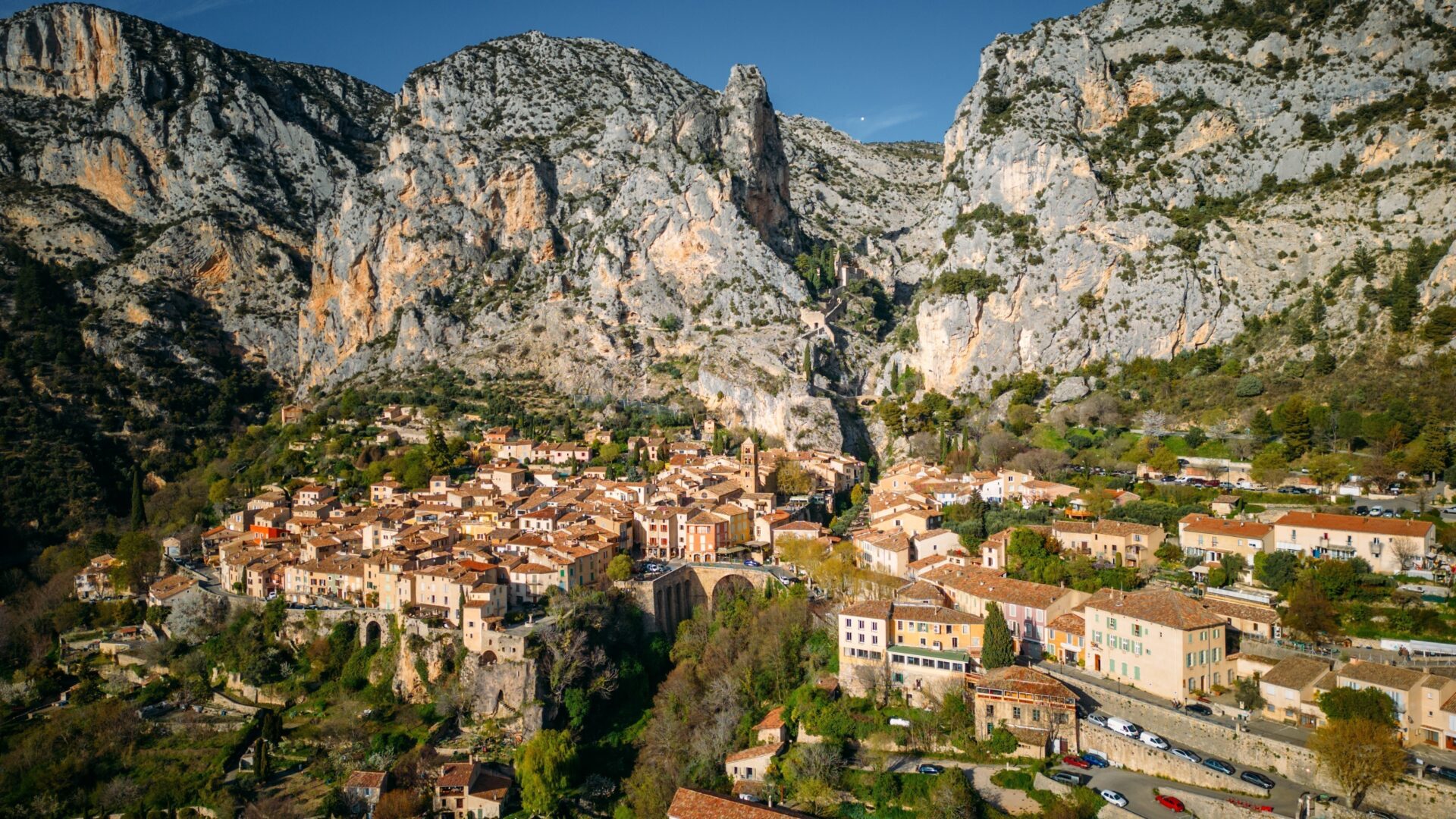
Moustiers: A Story of Stones
In Moustiers-Sainte-Marie, sometimes all you have to do is look down to discover traces of the past! Around a corner in a narrow alley, along an old path, or on the hills surrounding the village, the stones tell a story: that of the generations who shaped the landscape to live and farm on these steep slopes. Let’s set out to explore the terraced fields, the cobblestone streets, and this heritage that gives our village its unique charm.
 © OT Moustiers
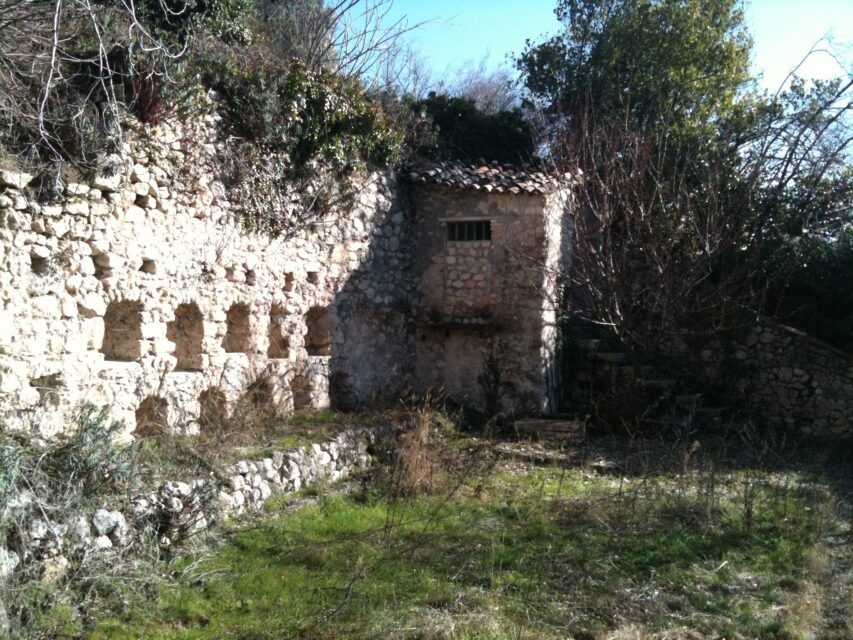
Terraces: The Art of Farming on Slopes
In the landscapes of Haute-Provence, the terraces bear witness to a time when every plot of arable land was precious.
These agricultural terraces, supported by dry-stone walls, transformed sloping terrain into flatter surfaces suitable for cultivation. In particular, they facilitated the cultivation of olive trees, fruit trees, and vegetable gardens, while limiting soil erosion.
Around Moustiers-Sainte-Marie, these structures bear witness to the ingenuity of past generations, who knew how to adapt to the terrain to make the most of natural resources.
Did you know?
Dry-stone walls are built without mortar! The stones are carefully selected and arranged to ensure the structure’s stability. This technique also allows water to seep between the stones, thereby reducing the pressure on the walls.
The calades: cobblestone paths steeped in history
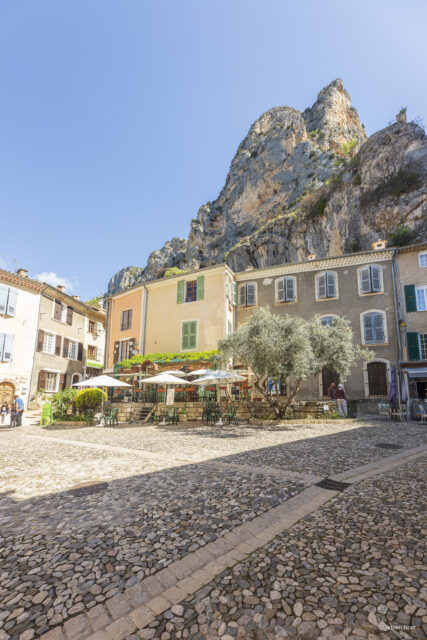
Another characteristic feature of Provençal villages: the calades!
These traditional paths are made of stones laid and fitted directly into the ground. Their construction helped stabilize the pathways—especially on steep alleys—and made it easier for residents and animals to get around.
Much more than just paths, the calades are a testament to true artisanal craftsmanship. Their construction required patience and precision to create a durable surface capable of withstanding the test of time.
 © Adrien Noat
In the Footsteps of Our Ancestors, to Notre-Dame de Beauvoir
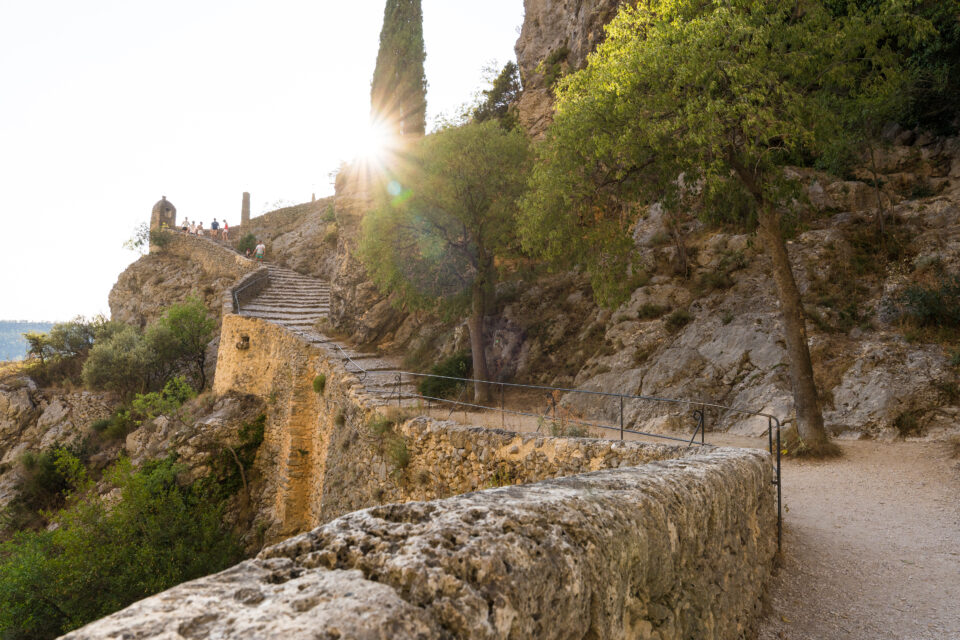
To explore this heritage, why not take the path leading to the Notre-Dame de Beauvoir Chapel?
Overlooking the village, this iconic site is reached by climbing approximately 262 steps, dotted with wayside shrines and offering magnificent views of the rooftops of Moustiers-Sainte-Marie and the surrounding countryside. As you climb, take the time to observe the steps, the stones along the path, and the historic features that line this historic route.
The climb up to Notre-Dame de Beauvoir perfectly illustrates how the locals have managed to adapt this steep terrain to provide access to this place of worship. It’s a walk that combines heritage, history, and scenic beauty!
Caution: Some steps may be slippery, especially in wet weather. Be sure to wear sturdy shoes.
 © Moustiers City Hall
 © Le Moal. G
A Living Heritage to Preserve
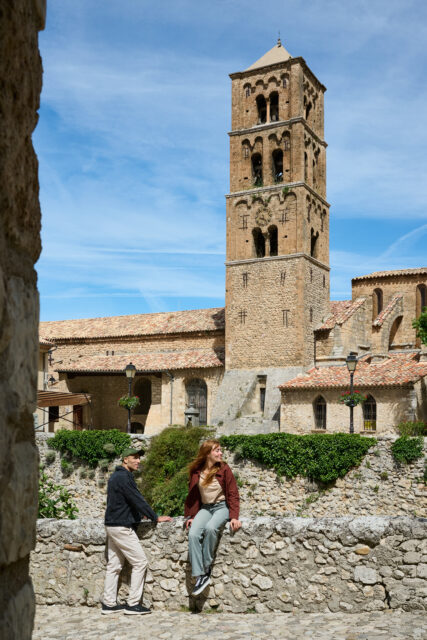
Today, terraces, cobblestone paths, and dry-stone walls are an integral part of the identity of the Provençal landscape.
Beyond their historical significance, these structures also play an important role in soil conservation, as well as in managing stormwater runoff and maintaining habitats that support biodiversity.
Dry-stone construction is, in fact, a craft recognized byUNESCO. It has been inscribed on the Representative List of the Intangible Cultural Heritage of Humanity since 2018.
Discover Moustiers-Sainte-Marie in a whole new way!
Fall and winter are the perfect seasons to take the time to explore Moustiers and its surroundings. Let the ancient paths guide you, take in the stone walls that line the trails, and imagine the lives of those who have shaped these landscapes over the centuries.
Heritage isn’t found only in monuments—it’s also hidden beneath our feet, around a bend in the path, or behind a simple stone wall. So, on your next visit, keep your eyes open: every stone might have a story to tell!